CLIENT NOTICES | Please visit www.spli.com/clientnotices for updated information regarding FLORIDA E-VERIFY REQUIREMENTS, ERC CLAIMS, and NO TAX ON TIPS OR OT.


June 12, 2026

Heat is one of the most dangerous hazards your crew can face. And it’s also one of the most underestimated. OSHA reports that 50-70% of heat-related deaths occur in the first few days on the job before a worker’s body has had the time to adjust to the heat.
A serious heat-related incident can mean lost work hours, high medical costs, and, depending on the severity, a workers’ comp claim that affects your coverage for years to come.
As summer temperatures continue to break record highs, protecting workers from heat illness isn’t just an OSHA requirement. It’s a must, especially for businesses in states with extreme heat. Here’s what you need to know.
Occupational Safety and Health Act Heat Injury & Illness Protection
In accordance with the Occupational Safety and Health Act General Duty Clause, employers are legally required to keep all workplaces they control free of safety and health hazards. This includes OSHA heat hazards, so it's essential that you take preventative measures if your workers are exposed to heat… both outdoors and indoors.
It’s important to note that 22 states have their own OSHA-approved standards and offer numerous industry- and location-specific resources for business owners on preventing heat-related illness in the workplace.
If you operate across multiple states, keeping track of what applies where can get complicated fast. A workers’ comp and payroll provider that works across state lines can help you stay on top of it.
OSHA Heat-Related Illness & Injury Overview
Heat-related illnesses and injuries, as defined by OSHA, include:
- Heat stroke
- Heat exhaustion
- Heat cramps
- Heat rash
Understanding the differences between these conditions isn't just about workplace compliance. It can literally save a life. Here is a breakdown of what each condition looks like, along with OSHA’s recommended response.
Heat Stroke
Heat stroke is the most severe heat-related illness, occurring when the body can no longer regulate temperature, causing a rapid rise to dangerous levels within minutes. It can cause confusion, altered mental state, slurred speech, unconsciousness, and more. If you suspect heat stroke, call 911 immediately. Then, move the worker to a cooler area and cool them quickly until medical help arrives.
Heat Exhaustion
Heat exhaustion results from excessive loss of water and salt, often through heavy sweating. Symptoms include heavy sweating, cold, clammy skin, a fast, weak pulse, nausea, dizziness, weakness, headache, or irritability. Unlike heat stroke, a person with heat exhaustion remains alert and continues sweating.
Anyone showing signs of heat exhaustion should be moved to a shaded or air-conditioned area, offered water, have clothing loosened, and have cool compresses applied. If symptoms worsen or persist beyond an hour, seek medical attention.
Heat Cramps & Heat Rash
Heat cramps affect workers who sweat heavily during strenuous activity, depleting salt and moisture, causing painful muscle spasms. Workers with muscle pain or spasms in the abdomen, arms, or legs should stop activity and rest in a cool place. Employers should provide water or electrolyte drinks, and workers should not return until cramps subside, as this may signal heat exhaustion.
Heat rash is a skin irritation caused by excessive sweating in hot, humid weather, often due to clogged pores that trap sweat. It appears as small red pimples or blisters on the neck, upper chest, groin, or elbows. OSHA advises keeping the rash dry, moving the worker to a cooler area, and avoiding tight clothing or ointments to prevent worsening.
OSHA Quick TipWhen the heat index is high, remember three simple words: Water. Rest. Shade. Providing these elements can prevent minor heat rash or cramps from escalating into a medical crisis. |
Heat-Related Illness In High-Risk Industries

Many workers operate in areas that can be exposed to high temperatures, both indoors and out. Some examples of industries that may be at greater risk include:
- Construction
- Agriculture
- Landscaping
- Mail delivery
- Firefighting
- Iron and steel mills
- Food service
- Electrical & other utilities
- Warehouses
When a worker has symptoms of a heat-related illness, it’s not just a health emergency. It’s a workers’ comp claim. And that claim follows your business well past the day the event occurred.
Here’s what one heat-related incident can cost your business:
- Medical care for the injured worker
- Lost productivity while they recover
- Higher coverage payments down the road, since claims affect your rates
- Possible OSHA penalties if you weren’t compliant
That’s why prevention isn’t just the right thing to do. It protects your bottom line. And when an incident does happen, dedicated claims administration ensures your claims are handled fast and managed correctly. That way, a single bad day won't become a long-term cost.
How to Recognize the Signs & Symptoms of Heat Illness
Knowing the signs of heat-related illnesses can help you take action and ensure your workers get the treatment they need.
Signs and symptoms include:
- Thirst
- Heavy sweating
- Hot, dry skin
- Elevated body temperature
- Dizziness
- Weakness
- Headache
- Nausea
- Decreased urine output
For serious symptoms such as confusion, fainting, seizures, loss of consciousness, or hot, dry skin, call emergency services immediately and follow your workplace emergency response procedures. These symptoms may indicate heat stroke, which can be life-threatening and requires prompt medical attention.
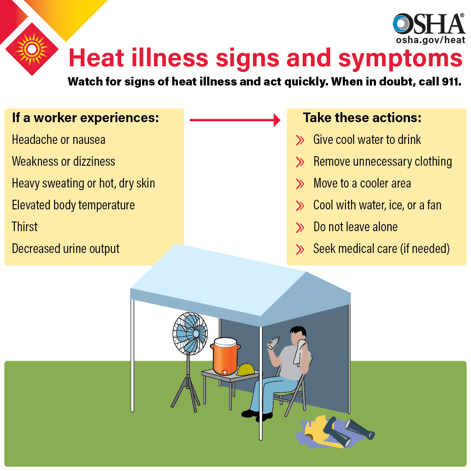
For less severe symptoms, move the worker to a cooler area, encourage them to drink water if they are alert and able, and continue monitoring them. Seek medical care if symptoms worsen or do not improve quickly.
When a heat-related illness strikes, the absolute priority is your worker's health and well-being. Fast, responsive claims handling ensures your injured team member receives immediate, seamless access to the medical care needed to recover.
By letting dedicated claims support manage the complex administrative process from start to finish, you protect your employee first while gaining the peace of mind to focus on running your business and keeping the rest of your crew safe.
How to Craft a Prevention Plan
When workers are exposed to high temperatures, business owners need to create a plan to prevent heat illness, similar to their overall workplace safety plan.
To build an effective strategy tailored to your specific job site, your plan should address active hazard monitoring, proper adjustment periods for employees, and immediate access to resources.
Every effective heat illness prevention plan should include the following core components:
Track the Heat Index
Begin by understanding heat hazards and the heat index. Monitoring the heat index is essential because it details the baseline temperature, the relative humidity, and exactly how the temperature actually feels based on those two factors combined. Fortunately, OSHA has an app that can track the heat index for you.
Ease Employees Into Hotter Environments
According to the National Institute for Occupational Safety and Health (NIOSH), employers can help reduce heat stress risks by training workers before they begin work in extreme temperatures and training supervisors to use the appropriate acclimatization practices.
OSHA recommendations include gradually increasing workers' time in hot conditions over a 7- to 14-day period, with supervision, until workers become acclimated.
Provide Hydration

Consistently providing water, rest, and shade for your workers can significantly reduce the risk of heat illness. Cool water should always be available for workers, though that's only the beginning. If you have workers who plan to spend more than two hours in the heat, you will need to provide them with electrolyte-rich drinks as well.
Provide Rest & Shade
Rest and shade can be provided to your workers simultaneously. If high heat conditions are prevalent at the worksite, you will need to require workers to take breaks. The frequency of these breaks depends on the severity of the heat. Breaks should be taken in the shade at the very least, but air-conditioned buildings or a tent with fans are preferable.
Keep Your Workers Covered
While setting up these workplace safety protocols is a vital daily practice, managing all of the moving parts can be a challenge. Building a plan from scratch takes time most owners don’t have, and getting it wrong can leave you exposed. Resources like safety and risk management programs can do the heavy lifting for you: building your OSHA heat illness prevention plan, training your crew, and keeping it current as the rules change.
By committing to OSHA heat illness prevention measures, you can create a safe working environment that's good for your employees and legally compliant with regulations. Get in touch with our team to make sure you're staying compliant and keeping your people safe.
LEGAL DISCLAIMER:
The information provided on this website does not, and is not intended to, constitute legal advice; instead, all information, content, and materials available on this site are for general informational purposes only. Information on this website may not constitute the most up-to-date legal or other information. This website contains links to other third-party websites. Such links are only for the convenience of the reader, user, or browser; we do not recommend or endorse the contents of the third-party sites.
Readers of this website should contact their attorney to obtain advice with respect to any particular legal matter. No reader, user, or browser of this site should act or refrain from acting on the basis of information on this site without first seeking legal advice from counsel in the relevant jurisdiction. Only your individual attorney can provide assurances that the information contained herein – and your interpretation of it – is applicable or appropriate to your particular situation. Use of, and access to, this website or any of the links or resources contained within the site do not create an attorney-client relationship between the reader, user, or browser and website authors, contributors, contributing law firms, or committee members and their respective employers.