CLIENT NOTICES | Please visit www.spli.com/clientnotices for updated information regarding FLORIDA E-VERIFY REQUIREMENTS, ERC CLAIMS, and NO TAX ON TIPS OR OT.


June 24, 2026
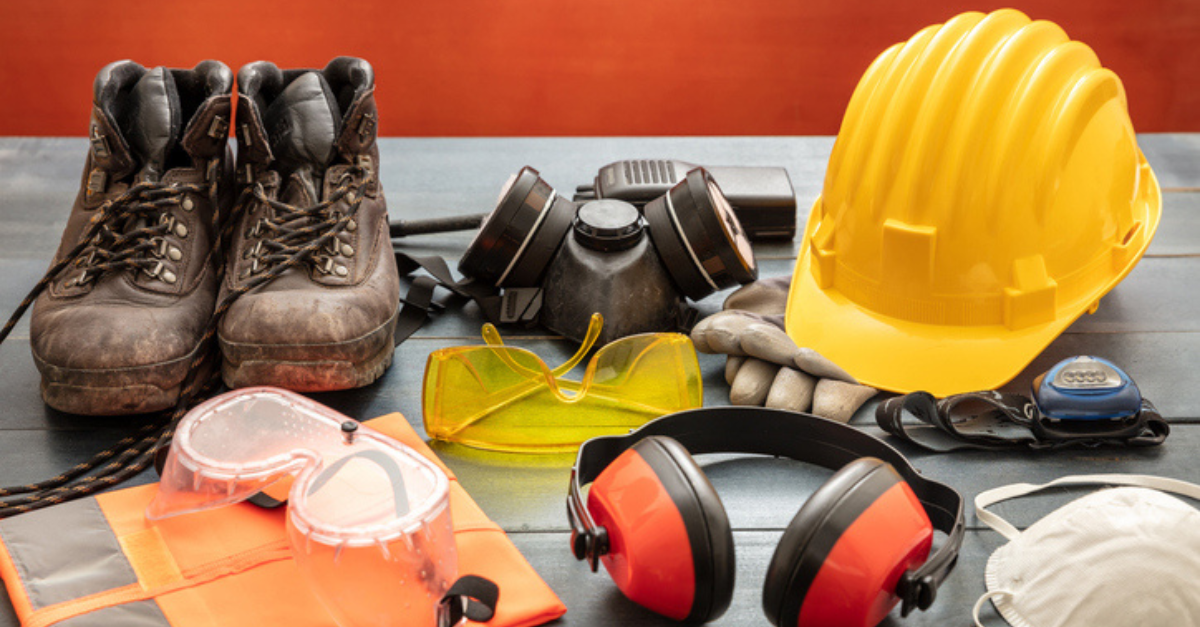
For business owners in high-risk industries, personal protective equipment (PPE) is one of the clearest responsibilities that OSHA places on employers. PPE standards spell out what protection workers need, who provides it, and how to implement it. Getting those details right protects employees and keeps your business on the right side of compliance.
For many business owners, PPE feels straightforward… hard hats, gloves, safety glasses. In reality, OSHA's requirements go far deeper than just gear. Hazard assessments, payment rules, training obligations, and documentation all factor in, and each one carries real compliance weight.
But let’s start at the beginning.
What Is Personal Protective Equipment?
.png?width=750&height=392&name=Untitled%20design%20(4).png)
Personal protective equipment is gear that workers wear or use to reduce their exposure to job-site hazards. It’s one layer in a larger safety strategy. And while it’s not a substitute for eliminating hazards, it’s an essential part of managing the ones that remain.
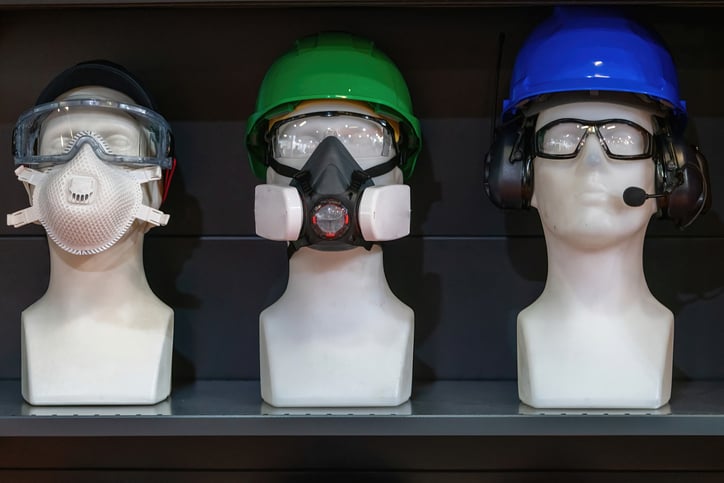
PPE covers several types of protection, including:
- Head protection, such as hard hats and helmets
- Eye and face protection, such as safety glasses, goggles, and face shields
- Hand protection, such as gloves tailored to specific hazards
- Foot protection, such as steel-toe boots and other protective footwear
- Hearing protection, such as earplugs and earmuffs
- Respiratory protection, such as respirators for airborne hazards
- Fall protection, such as harnesses, lanyards, and lifelines
- Protective clothing, such as high-visibility, cut-resistant, or flame-resistant garments
Understanding where PPE fits is the first step toward meeting OSHA's requirements.
Why PPE Standards Matter for High-Risk Employers

OSHA PPE standards are not just guidance for employers. They are a legal obligation. In high-risk industries, where hazards are more frequent and consequences more severe, that obligation carries even more weight. Such as:
-
Worker safety: PPE is often the last barrier between an employee and a serious injury.
-
Compliance: PPE violations are among the most cited OSHA findings. Inspectors look for them, and shortfalls can mean penalties, corrective action, and increased scrutiny on follow-up inspections.
- Cost: Injuries that do happen can raise workers' compensation costs for years through the experience modification rate, the multiplier insurers use to price coverage from a company's claims history.
But the cost to the business goes beyond the financial impacts. When workers are injured on the job, it can halt production, lead to jobsite closures, and cause disruptions throughout your project.
Meeting these standards is more about running a safer, more stable operation than just ticking boxes. It also helps manage the factors that increase workers' compensation rates. PPE can reduce the severity of injuries it's rated to protect against, though it doesn’t eliminate them.
For example, wearing a hard hat won't reduce the severity of an injury if someone’s fingers are severed. This is why the process behind it matters as much as the equipment. The first step is to understand exactly what OSHA requires.
What OSHA PPE Standards Require
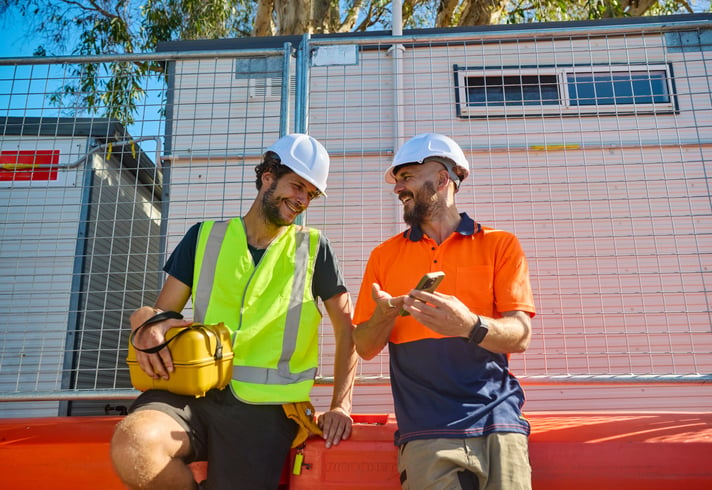
OSHA's PPE rules are built around a simple idea: employers must protect workers from the hazards they face. The specifics depend on the work and the setting.
Because requirements can differ across general industry, construction, and maritime operations, a single blanket policy rarely covers every crew or jobsite.
That said, a few core obligations do apply:
- Employers must assess the workplace to identify the hazards that call for PPE, accounting for the tasks involved, the tools and materials required, and the conditions workers are in.
- PPE must match the hazard, fit each worker properly, and be kept in reliable, sanitary condition.
PPE Levels for Hazmat and Emergency Response Work
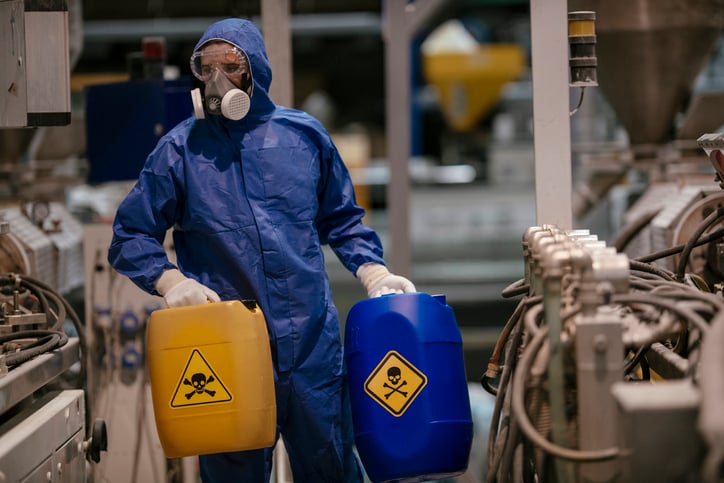
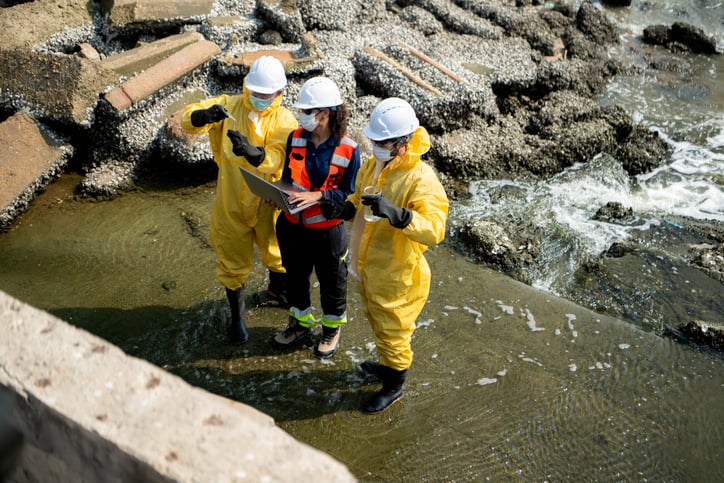
These four levels come from OSHA's hazardous waste and emergency response standard, known as HAZWOPER. They apply to operations like hazardous-waste cleanup, spill response, and work around uncontrolled chemical releases, not to routine day-to-day tasks.
For businesses whose crews do that kind of work, the levels offer a standard way to match protection to the hazard:
- Level A: Maximum skin, eye, and respiratory protection. This may include a fully encapsulating chemical-resistant suit with a self-contained breathing apparatus, or SCBA. A worker might need Level A protection when entering an area with an unknown chemical release, a high concentration of hazardous vapors, or a substance that can be absorbed through the skin.
- Level B: Maximum respiratory protection with less skin protection than Level A. This may include an SCBA with hooded chemical-resistant clothing. A worker might need Level B protection during a spill response where the air hazard is serious, oxygen levels are unsafe, or the substance is known, but full skin encapsulation is not required.
- Level C: Respiratory and chemical protection for identified hazards. This may include an air-purifying respirator with chemical-resistant clothing, gloves, and boots. A worker might use Level C protection during cleanup or decontamination work when the contaminant has been identified, measured, and can be filtered safely by the selected respirator.
- Level D: Basic protection for low-hazard conditions. This may include a work uniform, gloves, safety glasses, a hard hat, or protective footwear. A worker might use Level D protection during support tasks, site observation, or work in an area where there is no atmospheric hazard, splash risk, or harmful inhalation exposure.
Choosing the right level matters in both directions: too little leaves workers exposed, while too much adds heat stress, limits movement, and raises costs without improving safety. Employers with workers performing chemical or hazmat work should evaluate the specific site conditions, the substance involved, and the route of exposure before selecting PPE.
Who Provides and Pays for PPE?
The question of who pays for PPE comes up more often than most employers would expect. Workers sometimes show up with their own gear, some equipment may be shared, and certain items may blur the lines between OSHA requirements and personal preference. OSHA’s rules account for this, and knowing where the lines are drawn will protect your business.
Employers Generally Pay for Required PPE
Under OSHA's payment rule, employers must provide most PPE used to meet OSHA standards at no cost to employees. This covers items such as hard hats, most gloves, goggles, face shields, welding protection, and fall protection equipment.
A few limited exceptions exist. Employers generally do not have to pay for standard safety-toe footwear or standard prescription safety eyewear, as long as workers are allowed to wear those items off the job site. If certain items fall into a gray area, the applicable OSHA standard or a qualified safety professional can confirm what is required.
Employee-Owned PPE Still Requires Oversight
Employees are sometimes allowed to use their own PPE, but that does not remove the employer's responsibility. The employer still needs to confirm the equipment is adequate for the hazard and kept in a safe, working condition.
A short written policy can clarify when employee-owned PPE is permitted, how it gets approved, and when it must be replaced. Allowing personal gear is not the same as transferring liability for it.
Subcontractors and Staffing Change the Picture
In industries that rely on subcontractors or staffing agencies, PPE responsibilities should be clarified before work begins. A worker may be employed by one company, assigned to another jobsite, and exposed to hazards controlled by a general contractor or host employer. That can make it easy for teams to assume someone else is providing the required protection.
To avoid gaps, business owners should confirm:
- Which company is responsible for providing the required PPE
- Whether the PPE matches the specific hazards of the jobsite
- Who is responsible for site-specific PPE training
- How damaged, missing, or inadequate PPE will be replaced
- How PPE use will be documented and enforced on-site
If subcontractors or staffing workers arrive with their own PPE or PPE supplied by another company, that does not eliminate the need for oversight. The business controlling the worksite should still confirm that the equipment is appropriate for the task, fits properly, and is being used correctly.
Workers’ compensation coverage should also be documented separately. Certificates of insurance are important for subcontractor files, but they should not be treated as proof that PPE responsibilities have been handled. Clear expectations around both PPE and coverage help protect workers on-site and reduce confusion if an injury occurs.
|
For construction teams, an OSHA compliance and reporting checklist can help keep these details organized. |
PPE Considerations by High-Risk Industry
High-risk industries share a need for PPE, but the specific hazards and gear vary widely. The table below outlines common hazards and typical PPE by sector. It is a starting point, not a substitute for a hazard assessment of a specific work site.
|
Industry |
Common Hazards |
Typical PPE |
|---|---|---|
|
Construction & contractors |
Falls, struck-by, silica dust, sharp materials, noise |
Hard hats, fall protection, eye protection, safety footwear, high-visibility apparel, and respirators where required |
|
Tree care, landscaping & forestry |
Chainsaws, falling limbs, flying debris, traffic, heat, noise |
Head, eye, and face protection, chainsaw-resistant leg protection, hearing protection, high-visibility apparel |
|
Manufacturing & fabrication |
Machinery, metal fragments, welding, chemicals, heat, noise |
Safety glasses, face shields, welding helmets, gloves, protective clothing, hearing and respiratory protection |
|
Transportation, sanitation & field service |
Vehicle traffic, lifting, sharps, slips and falls, heat, noise |
High-visibility apparel, gloves, safety footwear, eye protection, hearing protection |
|
Marine & USL&H work |
Water exposure, slippery surfaces, confined spaces, heavy equipment |
Flotation devices where required, fall protection, protective footwear, gloves, and respiratory protection where applicable |
These examples show how quickly PPE needs can shift from one trade to the next. Seasonal risks add another layer. For example, crews working outdoors should also plan for OSHA heat illness prevention. Because PPE needs vary by industry, jobsite, task, and season, a structured PPE program matters more than relying on a single equipment list.
How to Build a Practical PPE Program
A reliable PPE program does not have to be complicated. For most high-risk businesses, it comes down to five repeatable steps, and it fits naturally within a broader workplace safety program.
- Assess the hazard: Review tasks, equipment, materials, and conditions, and involve supervisors and workers who know the daily risks. Reassess whenever the work, crew, or equipment changes.
- Select the right PPE: Match equipment to each identified hazard, and determine fit, comfort, and durability. One-size-fits-all gear tends to fail when workers and worksites vary.
- Train employees: Cover when PPE is needed, what to use, how to wear and adjust it, what it can and cannot protect against, and how to clean, store, and replace it.
- Document the process: Keep records of hazard assessments, PPE assignments, training, inspections, and replacements. These records support OSHA compliance and can strengthen a business's position if a workers' compensation claim is later disputed, including cases where a worker's misuse of provided gear is at issue, which states handle differently.
- Enforce and review: Set clear expectations, address noncompliance consistently, and review incidents, near misses, and claims trends to identify gaps before they lead to injuries.
Built once and maintained over time, this process turns PPE into a routine and gives business owners a defensible record of their safety efforts. It also pairs well with broader compliance strategies for high-risk industries.
SPLI Supports High-Risk Business Owners
PPE compliance does not have to be overwhelming, even for businesses operating in high-risk industries. At its core, a strong PPE program comes down to identifying workplace hazards, choosing the right protective equipment, training employees, documenting your process, and reviewing it regularly.
Handled proactively, PPE does more than help meet OSHA requirements. It protects employees, supports a safer workplace, and can help businesses better manage workers' compensation risk. For operation-specific requirements, always refer to OSHA’s PPE standards and consult a qualified risk advisor. And when the administrative demands of workers' compensation, payroll, and safety management become too much to manage alone, SPLI can help.
Ready to take some of that weight off your plate? Request a quote to see how SPLI can support your high-risk business.

LEGAL DISCLAIMER:
The information provided on this website does not, and is not intended to, constitute legal advice; instead, all information, content, and materials available on this site are for general informational purposes only. Information on this website may not constitute the most up-to-date legal or other information. This website contains links to other third-party websites. Such links are only for the convenience of the reader, user, or browser; we do not recommend or endorse the contents of the third-party sites.
Readers of this website should contact their attorney to obtain advice with respect to any particular legal matter. No reader, user, or browser of this site should act or refrain from acting on the basis of information on this site without first seeking legal advice from counsel in the relevant jurisdiction. Only your individual attorney can provide assurances that the information contained herein – and your interpretation of it – is applicable or appropriate to your particular situation. Use of, and access to, this website or any of the links or resources contained within the site do not create an attorney-client relationship between the reader, user, or browser and website authors, contributors, contributing law firms, or committee members and their respective employers.